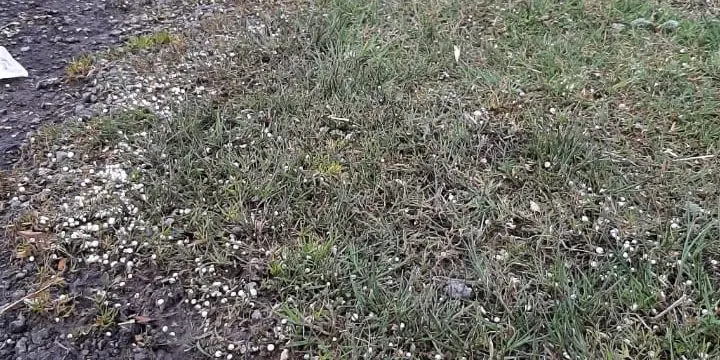
HUGE numbers of small polystyrene balls have been released into the environment – believed to have come from the demolition of the former Marine Biological Station in Port Erin.
Massive amounts – described by observers as “millions” – appear to have been released from the cavity walls of the building which had been filled with the polystyrene for insulation purposes.
Susan Rossouw, a supporter of Beach Buddies, said she was “dismayed” by the incident. She said, “Yesterday I was on the beach and it is full of these little polystyrene balls. They are clustered in hollows where there is seaweed and on the tideline . . . millions and millions of virtually indestructible little balls. It is very sad indeed, and for me quite depressing.
“My husband worked in building and he suggests that this material was used in cavity insulation, and when the building [Marine Biological Station] was demolished it has all been released.”
A spokesman for Beach Buddies said, “If this really is proved to be a case of the polystyrene coming from cavity insulation at the Marine Biological Station then someone needs to explain how this has been allowed to happen. Polystyrene causes massive damage to wildlife, because animals can’t distinguish the difference between materials like this and items such as fish eggs.
“The Isle of Man has a worldwide reputation for its care for the environment as a UNESCO Biosphere Reserve. We need everyone across the community to be involved, and in this case it appears we have not been thinking through the results of our actions.”